In short
A garage door that won't close from the remote is most often a sensor problem, not a broken door. In Cheshire, a technician checks the photo-eyes and wiring, resets the travel and force, and confirms the door reverses on contact before leaving. Don't bypass the sensors in the meantime.
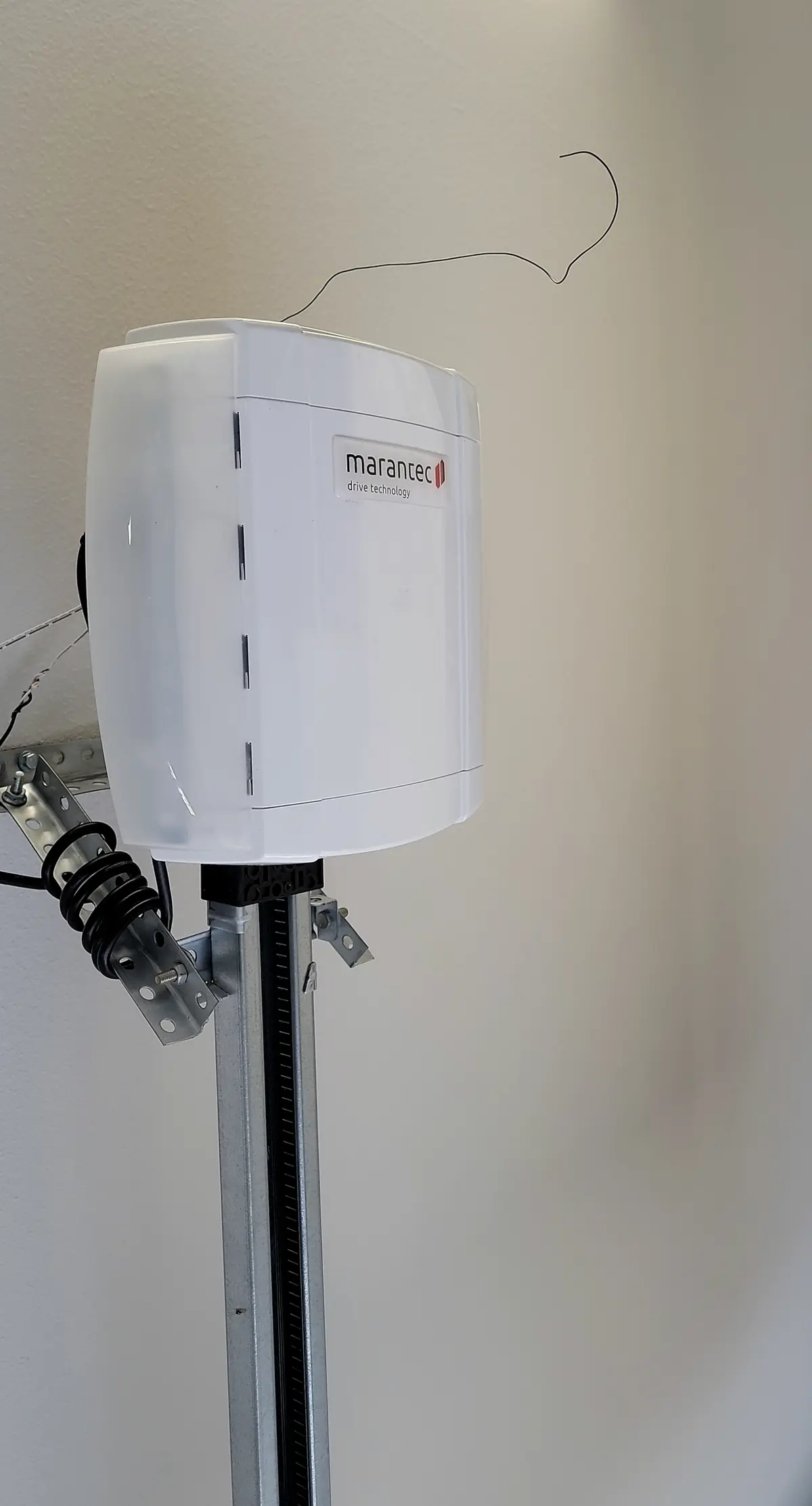
Doors that won't close in Cheshire
In Cheshire Village and along Cornwall Avenue, older homes have detached garages with wood frames, and sensors mounted on them drift with the seasons. Mixville and the south end have mid-century ranches with compact garages, where the sensors are bumped by cars and mowers. In East Cheshire and the north end, newer and larger houses have busy three-bay garages. Cheshire is also greenhouse and farm country, and outbuildings with long wire runs are common; mice find that wire. If both sensor lights are dark, look for a break before replacing anything.
Why a garage door refuses to close
- Door starts down, then goes back up. Something is blocking, or seems to be blocking, the two safety sensors near the floor.
- Opener light blinks and the door stays open. The sensors have lost sight of each other: a bumped bracket, a dirty lens or a broken wire.
- Door closes only if you hold the wall button. That is the opener overriding its sensors. It tells you the sensors are the problem, and it is not a way to run the door day to day.
- Door closes, touches the floor and reopens. The travel or force setting is off, or the floor has heaved and the door thinks it hit something.
Quick things to rule out
- Is anything in the path of the beam, even a leaf or a cobweb?
- Are both sensor lights lit and steady?
- Does the problem only happen at one time of day? That points to sun in the sensor.
- Is the wall control's lock or vacation button switched on? It disables the remotes.
Anything beyond that, including limit and force adjustment, is a job for a technician, because a wrong setting can stop the door from reversing when it should.
How the repair is done
The technician tests the sensors and their wiring, realigns or replaces them, then checks the close limit and the force setting. Before leaving, the door is tested on a block of wood laid flat in the doorway: it has to reverse as soon as it touches it. If the door itself is binding in the tracks, that is corrected too, since a stiff door is often what set the opener off in the first place.
Around Cheshire
- Cornwall Avenue area: Central streets near the canal trail, mostly mid-century houses with attached garages.
- East Cheshire: Toward Wallingford and the Quinnipiac River, with newer subdivisions and larger garages.
See the full Cheshire service area.